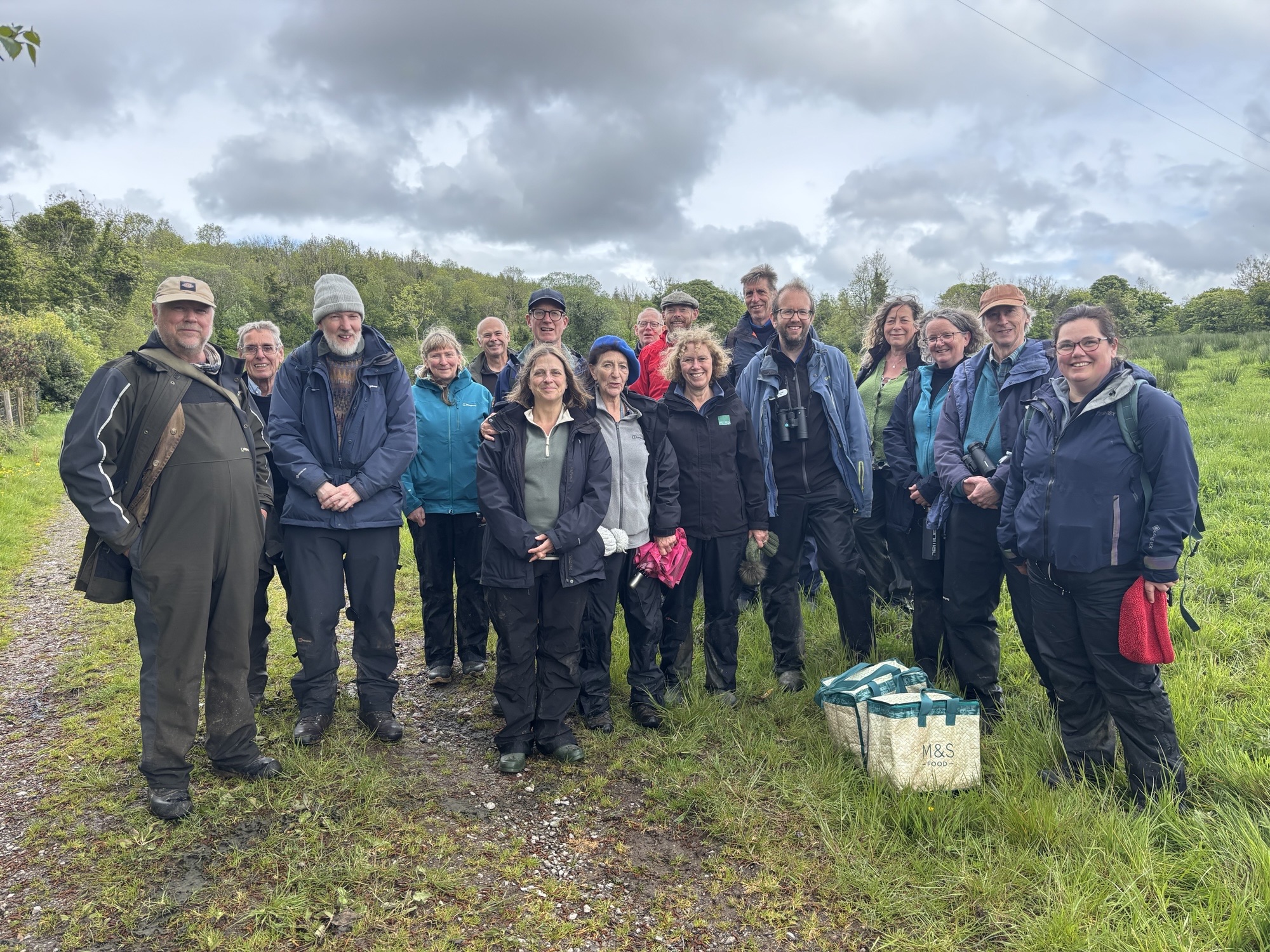
Following our involvement with the Northern Ireland Science Festival in February this year, the FMP team, one of our FMP Ambassadors, and members of our Steering Group, organised a field trip to Northern Ireland in May. We did this in order to gain a better understanding of wet grassland and potential for restoration in some of Northern Ireland’s floodplain areas. We were kindly hosted by representatives from the Ulster Wildlife Trust, RSPB, National Trust and the Department of Agriculture, Environment and Rural Affairs (Daera). We visited the Lagan Valley in Belfast - an extremely valuable blue-green corridor into the city, as well as existing meadows and floodplain grasslands in Fermanagh county. This included the glories of Ulster Wildlife’s latest purchase Fedian, where we were treated to a wonderful display of Marsh fritillary butterflies in the sunshine!
During the visit the team discussed the potential for restoration of the Lagan Meadows, opportunities for engagement with local communities, agricultural payments for grassland management, data collection and surveying, mapping of historic floodplains meadows and raising greater awareness of the value of species rich grassland. We all appreciated the enthusiastic contribution from our hosts, not to mention the opportunity to meet with the farmers and rangers managing these grasslands.
The group at Fedian Fields
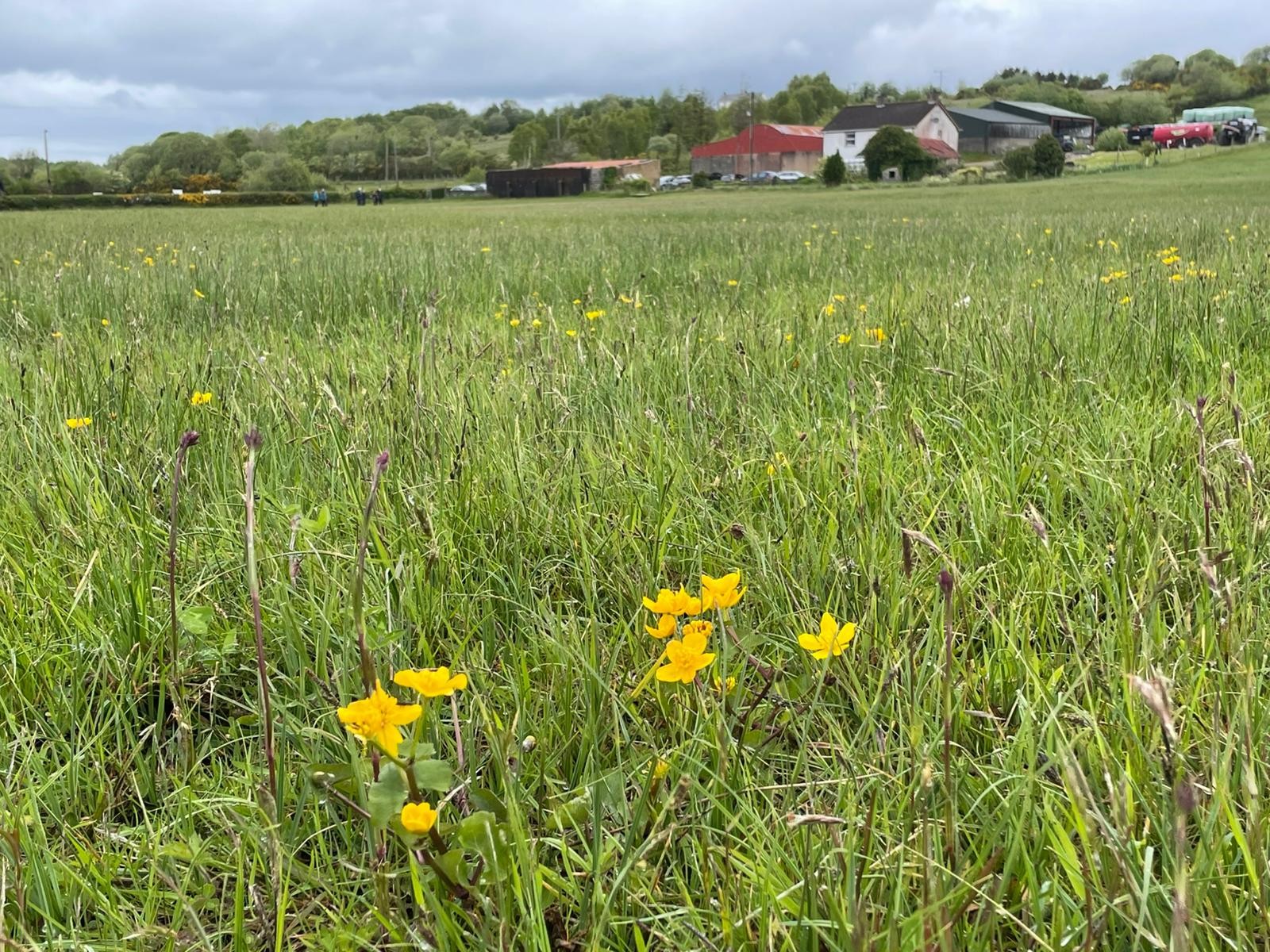
The Northern Ireland Lowland Meadow Habitat Action Plan in 2005 estimated that there were 937 ha of high-quality dry species rich grassland of ASSI quality (20 species per 4m2), but it is likely that alongside other habitat declines, this estimate will have reduced since the HAP was written 30 years ago. The report did not highlight the extent of wetter species-rich grassland separately. The floodplains of Lough Neagh, Lough Beg and Upper Lough Erne hold most of the N.I species rich FPM resource and are largely protected as ASSI’s. The quality and extent of these is probably not well known as they are mostly assessed as Purple Moor-Grass and Rush Pastures, or Fens, during common standards monitoring. During our visit we discussed a possible need to better understand the scientific interest on these floodplains ASSI’s so that habitats are correctly identified and monitored, and correct management can be applied.
Meadows in Fermanagh
We have subsequently been invited to present at a Knowledge Exchange Seminar Series (KESS) at Stormont in early November 2026, where we will be sharing our research and insights with policymakers and stakeholders. We want to highlight that the most effective solutions to today's environmental challenges may already exist within Northern Ireland’s landscapes. There is considerable scope to explore the potential for more sustainable management of floodplain land in Northern Ireland, to the benefit of both food production and delivery of ecosystem services. Better understanding of the historic extent and existing resource of floodplain meadows in Northern Ireland could underpin targeted agri-environment support for land managers, based on similar schemes being developed across the UK.